Woven Wire Mesh Inspection Execution Standard
2023-08-07
Mesh Inspection Execution Standard
I. Inspection Procedure
II. Unacceptable mesh defects
Inspection Procedure
1. First, control the raw material of the mesh and check whether it is strongly magnetic. Stainless steel raw materials are not magnetic, but weak magnetism generated during the weaving process is acceptable.
2. Check the label of the mesh, inspect the weight of the mesh, and observe the color of the mesh. The weight error cannot exceed negative 5%. The theoretical calculation formula for mesh weight is: theoretical weight = wire diameter x wire diameter x mesh size x length x width /2. Meshes with inconsistent colors, yellow wires, black wires, and hard wires are not acceptable.
3. Check whether the mesh is curling. A. Cut 1-2mm strips, cut them into small sections, and check whether they curl naturally. B. Spread out 1-2 meters of mesh and see if it curls naturally.
4. Measure the mesh size and wire diameter. The mesh size error for meshes above 10 meshes is within +/-2%, and meshes below 10 meshes are controlled within +/-1 mesh; the wire diameter ellipticity and wire diameter error can be seen in the "National Standard for Mesh Weaving Error." Depending on the thickness of the wire, it is generally within 0.02-0.1 or -3%.
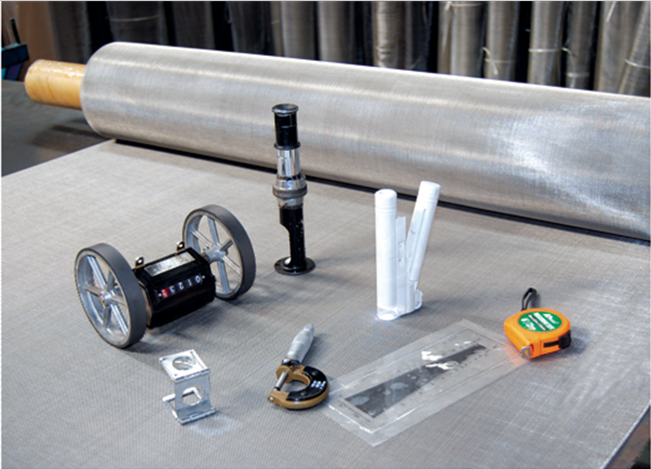
5. Measure the width and length of the mesh. The width error is -1mm ~ +5mm, and the length of the mesh is measured using a roll-up mesh counter.
6. Wipe off dirt, fabric, and oil stains on the mesh.
7. The mesh cannot have embroidery, large mesh holes, usual mouthiness, mosquito bites, broken wires, and creases.
8. Article 3 should be tested twice at the beginning and at the end, and Article 4, 5, and 30-meter meshes should be tested at least three times. Pay attention to Articles 6 and 7 at all times.
9. The mesh should be tightly rolled, and the ends should be neat.
10. For the following small mesh defects, only up to three spots are allowed per roll of mesh.
Unacceptable mesh defects
1 . Folding Marks:
The stripe marks on wire mesh surface that cannot be erased.
2. Broken Holes:
Multi-pieces broken wires at same site to form a hole in the surface.
3. Rusty Spots:
Colored changed by corrosion. Color spots in the surface.
4. Broken Wire:
Broken of single wire.
5. Wire Back:
The wire coiled, tied or twisted into the mesh forms a protruding above surface. Weft wire tied up called dead coiling. These will mostly cause the opening exceeding maximum opening range, or the wire mesh surface protruding.
6. Knot Bulging:
Warp wire not well knotted causes bulging out of the surface.
7. Weft Twisting:
Weft wire twists.
8. Wire Doubling:
Two pieces of wire or more get into one. Where there should be only one weft or warp wire, inserted two or more wires.
9. Mistaken Weaving:
Some weft wire or warp wire are woven together in error. Easily happen for diamond wire mesh.
1 0. Loosening of Wire:
Twisting or moving of single or some pieces of warp wire or weft wire.
1 1 . Weaving In of Impurity:
Non-woven materials woven in the fabric cause deformed opening or blocking to affect the neatness of surface. The soft stuff that cannot be moved, also not protruding, may remain as defects; the hard and protruding stuff must be picked out, otherwise it may damage the neighboring wire mesh.
1 2. Flattened Wire: Weft or warp wire deformed by mechanical operation may cause deformed opening when woven into wire mesh.
1 3. Density Error: Aperture density exceeding density scope causes unqualified mathematics average value of aperture.
1 4. Weft Wire Backward: Weft wire backward may cause irregular aperture or even worse, to make the opening exceeding deviation allowance.
1 5. Irregular Aperture: Regular big or small openings between weft wires. One big opening is followed with one small opening for Plain Woven wire mesh. For Twill Woven, usually two big opening then two small, or one big then three small, etc.
1 6. Bulging Out: One site or some sites along warp direction bulges out, while the aperture does not change much. This kind of defect influences the surface quality of wire mesh.
1 7. Cloud Shape Weaving: Cloud shape bulging formed in the surface of wire mesh. Caused by weft wire pressed in a different direction. Usually occurs during weaving of medium sized wire mesh.
1 8. Roll loosening: The wire mesh has no intensive feeling, can be twisted along warp or weft wire at an angle of 45°.
1 9. Other defects: Including dirty surface, mechanical folding, rusty spots, extra roll width difference, insufficient roll length, breaking of wire mesh, etc.
Forbidden Mesh Diseases
1. The crimped mesh cannot have a phenomenon of twisted wire.
2. For Dutch-type mesh, it should be noted that there should be no large areas of bright spots (small broken wires), arching, and grooves.
2023 Indonesia Exhibition
Common questions about vibrating screen
Related Article
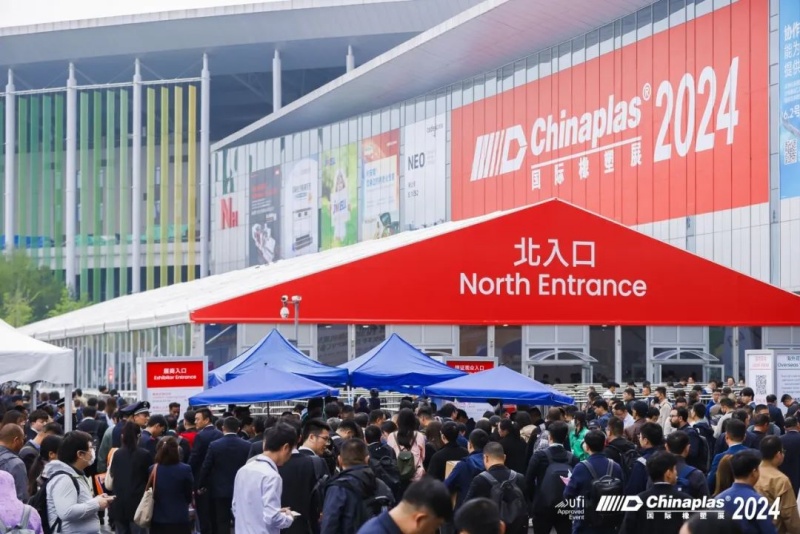
"CHINAPLAS 2024 International Rubber and Plastics Exhibition" today marks the beginning of the curtain.For four consecutive days (April 23-26).At the National Convention and Exhibition Center (Shanghai).
CHINAPLAS 2024 International Rubber and Plastics Exhibition