
Operating procedures for threading and reeding
2024-04-18
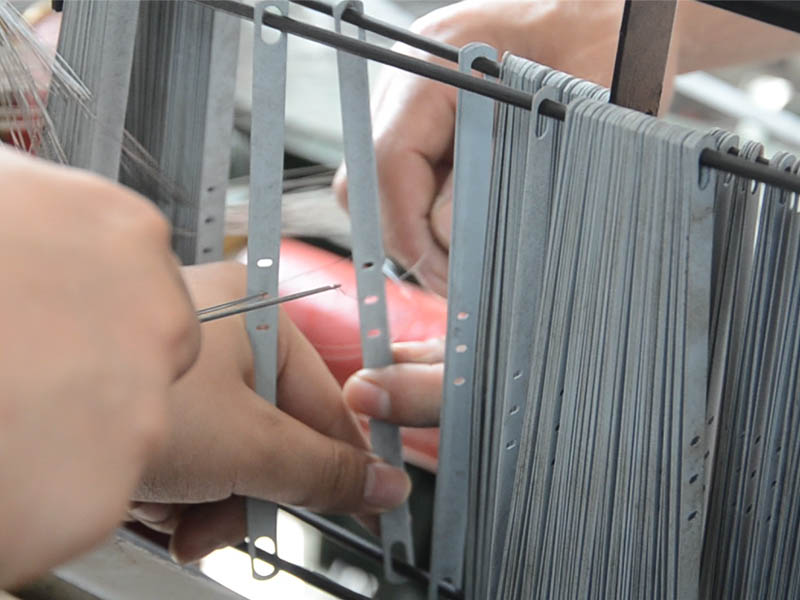
1. Preparation work
(1) According to the product specifications on the task sheet, the weaver retrieves the heald, picks out the ones with burrs or unevenness (old heald can also be used), and installs the heald frame. When installing heald sheets, pay attention to the specifications of the heald sheets, calculate the total number of heald sheets and the number of separate heald sheets. First polish the burrs and uneven heald pieces, and then install the heald frame. The tension of the comprehensive card should be appropriate. When installing the comprehensive card, the coordination between the comprehensive card and the horizontal plate of the comprehensive frame should be very loose, leaving a gap of 1mm. If the spacing is too small, the heald frame will become tighter when subjected to force, making it difficult for the heald sheet to move or twist on the heald reinforcement. The distribution of comprehensive cards should be uniform and the number should not be too small.
(2) Lift the comprehensive frame properly and be careful not to lift it upside down.
(3) The weaver unties the warp threads on the warp shaft one by one, passes them around the warp roller, and pulls them tightly with a weight every 16cm-25cm. After all the warp threads are untied, slowly rotate the warp roller to release 1.3m-2m warp threads. When the stranded wire is released along with the warp thread, if the length of the released warp thread is not enough, the stranded wire can be moved back.
(4) Put on the winch. If threading harnesses on the machine, the winch can be tied to the warp support frame and fixed to prevent movement during threading; If threading the harness under the machine, the winch can be tied to the wire support frame. Prepare the lifting frame and set up the threading and reeding frame.
(5) According to the task list, obtain qualified reeds. When receiving the reeds, it is necessary to check whether the actual specifications of the reeds match the specifications on the task sheet, and to check the internal quality and cleaning quality of the reeds, and find the locking points.
(6) Wrap the steel reed in kraft paper and place it on the reed mat or in a grooved wooden board.
(1) According to the product specifications on the task sheet, the weaver retrieves the heald, picks out the ones with burrs or unevenness (old heald can also be used), and installs the heald frame. When installing heald sheets, pay attention to the specifications of the heald sheets, calculate the total number of heald sheets and the number of separate heald sheets. First polish the burrs and uneven heald pieces, and then install the heald frame. The tension of the comprehensive card should be appropriate. When installing the comprehensive card, the coordination between the comprehensive card and the horizontal plate of the comprehensive frame should be very loose, leaving a gap of 1mm. If the spacing is too small, the heald frame will become tighter when subjected to force, making it difficult for the heald sheet to move or twist on the heald reinforcement. The distribution of comprehensive cards should be uniform and the number should not be too small.
(2) Lift the comprehensive frame properly and be careful not to lift it upside down.
(3) The weaver unties the warp threads on the warp shaft one by one, passes them around the warp roller, and pulls them tightly with a weight every 16cm-25cm. After all the warp threads are untied, slowly rotate the warp roller to release 1.3m-2m warp threads. When the stranded wire is released along with the warp thread, if the length of the released warp thread is not enough, the stranded wire can be moved back.
(4) Put on the winch. If threading harnesses on the machine, the winch can be tied to the warp support frame and fixed to prevent movement during threading; If threading the harness under the machine, the winch can be tied to the wire support frame. Prepare the lifting frame and set up the threading and reeding frame.
(5) According to the task list, obtain qualified reeds. When receiving the reeds, it is necessary to check whether the actual specifications of the reeds match the specifications on the task sheet, and to check the internal quality and cleaning quality of the reeds, and find the locking points.
(6) Wrap the steel reed in kraft paper and place it on the reed mat or in a grooved wooden board.
2. Procedures for threading and reeding operations
(1) Lift the left warp thread from the support roller and move it to the front of the steel reed. Tighten and organize to ensure that the warp threads are neat and consistent, and tie them with a string with appropriate elasticity, making it easy for the warp threads to be pulled out in order when threading.
(2) Dress in order from left to right.
(3) Each time, neatly separate 4-10 wires from the twisting point and thread them into the comprehensive eye one by one in the specified order. Traditionally, the row of heald sheets closest to the steel reed is called the first row of heald sheets.
1) Plain weave:
Two single row heald sheets, threaded in the order of 1 and 2;
Two pages of double row composite film, threaded in order of 1, 3, 2, and 4.
2) Twill:
Four page single row composite film, threaded in order of 1, 2, 3, and 4;
Four page double row composite film, threaded in order of 1, 3, 5, 7, 2, 4, 6, and 8.
(4) Hang the warp thread passing through the frame on the hanging clip.
(5) Before threading, determine the position of the first wire on the steel reed, and ensure that the remaining parts on both sides of the reed are roughly equal after the warp thread is threaded.
(6) Check the sequence of the threads passing through the heald one by one, and then thread them into the steel reeds after confirming that they are correct. Thread 4-20 threads into the steel reeds one by one (or use a reed cutter to thread them into the reed hole one by one). Usually, a bundle is formed every 8cm-10cm.
(7) Three inspections should be carried out when threading steel reeds.
1) Check for any errors when wearing a short section;
2) During shift handover, check the quality of clothing worn on duty;
3) After threading the steel reed, conduct a comprehensive inspection.
If any phenomena such as double lines, empty reed holes, wrong twisting, threading, etc. are found, they should be corrected in a timely manner.
(1) Lift the left warp thread from the support roller and move it to the front of the steel reed. Tighten and organize to ensure that the warp threads are neat and consistent, and tie them with a string with appropriate elasticity, making it easy for the warp threads to be pulled out in order when threading.
(2) Dress in order from left to right.
(3) Each time, neatly separate 4-10 wires from the twisting point and thread them into the comprehensive eye one by one in the specified order. Traditionally, the row of heald sheets closest to the steel reed is called the first row of heald sheets.
1) Plain weave:
Two single row heald sheets, threaded in the order of 1 and 2;
Two pages of double row composite film, threaded in order of 1, 3, 2, and 4.
2) Twill:
Four page single row composite film, threaded in order of 1, 2, 3, and 4;
Four page double row composite film, threaded in order of 1, 3, 5, 7, 2, 4, 6, and 8.
(4) Hang the warp thread passing through the frame on the hanging clip.
(5) Before threading, determine the position of the first wire on the steel reed, and ensure that the remaining parts on both sides of the reed are roughly equal after the warp thread is threaded.
(6) Check the sequence of the threads passing through the heald one by one, and then thread them into the steel reeds after confirming that they are correct. Thread 4-20 threads into the steel reeds one by one (or use a reed cutter to thread them into the reed hole one by one). Usually, a bundle is formed every 8cm-10cm.
(7) Three inspections should be carried out when threading steel reeds.
1) Check for any errors when wearing a short section;
2) During shift handover, check the quality of clothing worn on duty;
3) After threading the steel reed, conduct a comprehensive inspection.
If any phenomena such as double lines, empty reed holes, wrong twisting, threading, etc. are found, they should be corrected in a timely manner.
CHINAPLAS 2024 International Rubber and Plastics Exhibition
Special metal mesh woven workwear - steel reed
Related Article

"CHINAPLAS 2024 International Rubber and Plastics Exhibition" today marks the beginning of the curtain.For four consecutive days (April 23-26).At the National Convention and Exhibition Center (Shanghai).
CHINAPLAS 2024 International Rubber and Plastics Exhibition
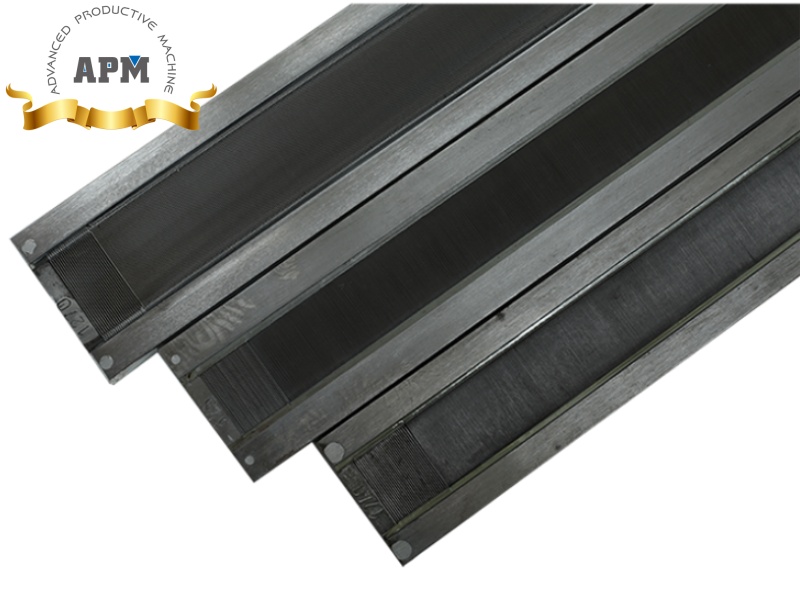
The function of the reed:
The reed is used to determine the warp density and the width of the weaving shed, guide the rapier through the shed, and direct the weft wire towards the shed to complete the weaving process.
The reed is used to determine the warp density and the width of the weaving shed, guide the rapier through the shed, and direct the weft wire towards the shed to complete the weaving process.
Special metal mesh woven workwear - steel reed
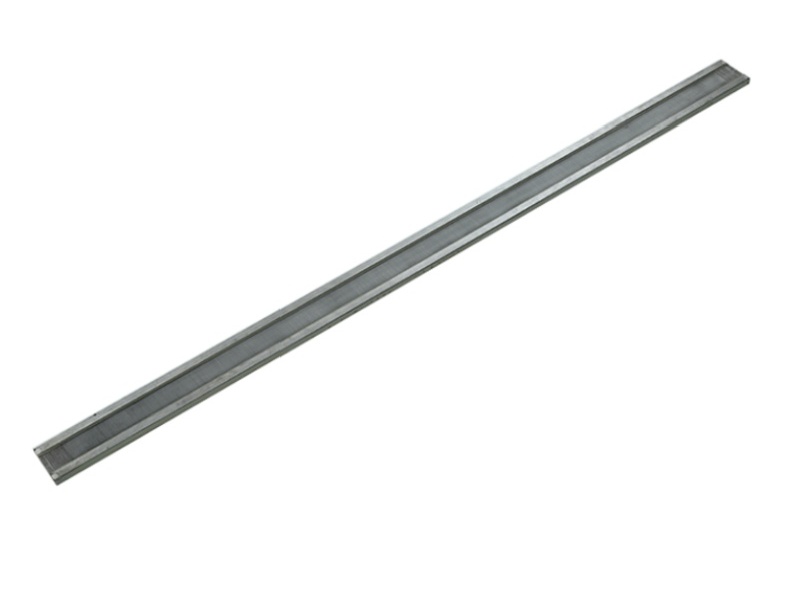
Steel loom reed is a specialized standard tool for weaving metal wire mesh. Its quality has a significant impact on the quality of the products, so the manufacturing of steel loom reeds is highly valued in metal wire weaving factories.
Introduction to the Manufacturing Process of Steel Loom Reed